Services
Personalized approaches to support brain function, nervous system regulation, resilience, and well-being.
Anxiety, Trauma & Emotional Regulation

Many people experiencing anxiety, chronic stress, emotional overwhelm, or the effects of traumatic experiences describe feeling constantly on edge. It may become more difficult to relax, sleep well, focus, or experience a lasting sense of calm. Some notice persistent worry and overthinking, while others feel emotionally numb, easily overwhelmed, or highly reactive to everyday situations.
Stressful experiences can influence how the brain and nervous system respond to the world. Over time, these patterns may become habitual, even when they are no longer helpful. Because the brain remains adaptable throughout life, it has the capacity to develop more balanced patterns of functioning.
How we may support you
Brain Mapping (qEEG) is often the first step, helping us better understand your brain activity patterns and develop personalized recommendations. Depending on your individual goals, neurofeedback may help encourage more balanced patterns of brain activity. At the same time, Sound Energy Healing can provide a deeply calming experience that supports relaxation and nervous system regulation.
Attention, Learning & Self-Regulation
Attention, learning, and self-regulation can be influenced by many factors, including ADHD, specific learning challenges, chronic stress, insufficient sleep, anxiety, and the effects of traumatic experiences. These factors can affect how the brain processes information, making it more difficult to concentrate, retain new information, learn efficiently, and regulate attention and emotions.
Children and adults with ADHD often find it challenging to sustain attention on tasks that are not especially engaging. Some experience impulsivity or hyperactivity, while others primarily struggle with distractibility, forgetfulness, staying organized, following through on everyday tasks, or regulating emotions and frustration. Some children may also experience speech, language, or other learning challenges that can affect their confidence and academic progress.
Attention difficulties can also occur without ADHD. Chronic stress, poor sleep, anxiety, and emotional overwhelm may reduce concentration, contribute to mental fatigue, increase distractibility, and make learning more difficult.
How we may support you
Brain Mapping (qEEG) helps us better understand how your brain—or your child’s brain—is processing information related to attention, learning, and memory. By analyzing patterns of brain activity across different brain regions, we develop personalized recommendations based on the individual’s brain activity patterns, symptoms, and goals. Neurofeedback is our primary approach for improving attention, focus, and self-regulation. When chronic stress or nervous system dysregulation is also present, we may recommend complementary approaches, such as Sound Energy Healing.

Sleep, Rest & Rejuvenation

Sleep difficulties can have many contributing factors, including chronic stress, anxiety, emotional overwhelm, traumatic experiences, irregular sleep habits, medical conditions, medications, or changes in brain and nervous system regulation. Often, several of these factors interact, making it difficult for the brain and body to fully rest, recover, and restore themselves.
Many people experience difficulty falling asleep, wake frequently during the night, or wake too early and cannot return to sleep. Others sleep through the night but still wake feeling tired and unrefreshed. Poor sleep can affect energy, concentration, memory, mood, and overall well-being, making everyday life feel more demanding and leaving us with less energy and resilience.
How we may support you
We begin by discussing your sleep patterns, lifestyle, and general sleep hygiene. Brain Mapping (qEEG) can provide additional information about patterns of brain activity that may contribute to your sleep difficulties. Together with your symptoms and goals, these insights help us develop personalized recommendations.
Neurofeedback is our primary approach for supporting healthier sleep by encouraging more balanced patterns of brain activity and helping the brain transition more easily into a relaxed state when it is time to sleep. When appropriate, Sound Energy Healing may complement neurofeedback by helping release mental and physical tension and promoting deep relaxation.
Peak Performance
Peak performance is not only about achieving more – it is about consistently functioning at your best. Whether in business, academics, athletics, the performing arts, or everyday life, optimal performance depends on the brain’s ability to sustain attention, process information efficiently, adapt to changing demands, and remain calm under pressure.
Even highly successful individuals may notice that stress, mental fatigue, inconsistent focus, poor sleep, or emotional overload interfere with their performance. Others seek to enhance concentration, creativity, decision-making, learning, memory, resilience, or their ability to remain composed during demanding situations. Because the brain remains adaptable throughout life, many of these abilities can continue to develop with the right training and practice.
How we may support you
Brain Mapping (qEEG) helps us better understand how your brain is functioning during attention, information processing, and self-regulation. By analyzing patterns of brain activity across different brain regions, we develop personalized recommendations based on your individual brain activity patterns, goals, and areas you would like to strengthen.
For many individuals seeking to optimize performance, neurofeedback becomes the central training approach. Its goal is to encourage more efficient and flexible patterns of brain activity that support sustained attention, mental clarity, resilience, and consistent performance. Depending on your individual goals, complementary approaches such as Sound Energy Healing may also support relaxation, recovery, and resilience, helping you meet demanding situations with greater ease and mental flexibility.

Not sure whether Neurofeedback is right for your situation?
Many people contact us with concerns that are not listed above. We are happy to discuss your questions, learn about your goals, and let you know whether neurofeedback or one of our complementary approaches may be appropriate for your individual situation.
Examples include:
- Obsessive-Compulsive Disorder (OCD)
- Migraines
- Concussion recovery
- Long COVID
- Chronic fatigue
- Addiction recovery
- Autoimmune conditions
- Autism spectrum disorders
Personal and spiritual growth
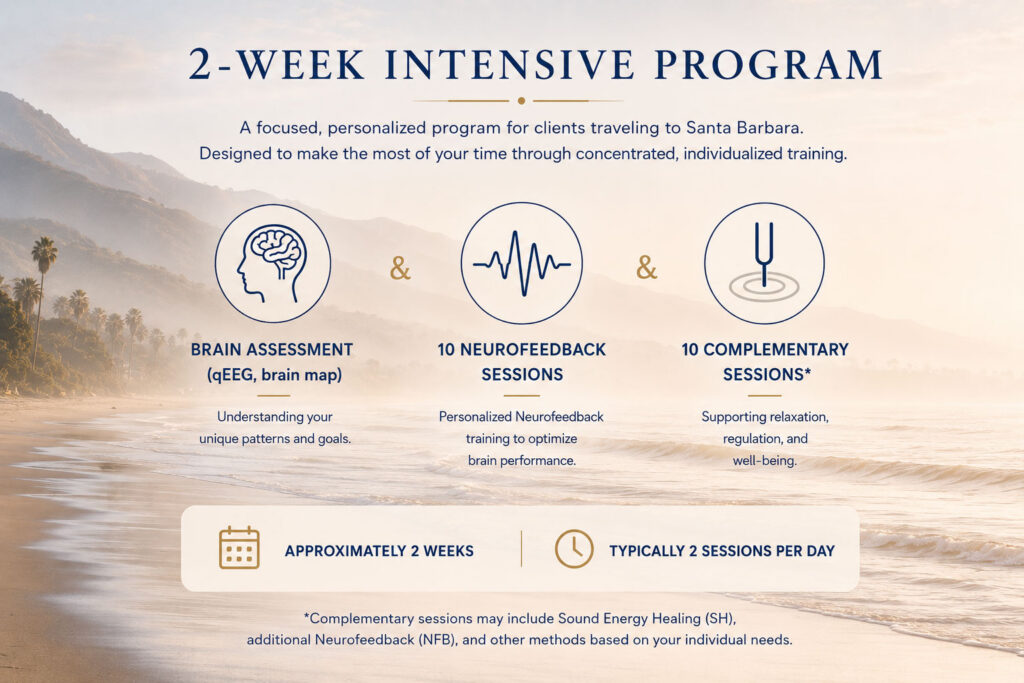
Visiting from Out of Town?